Precision Tooling and Die Build
Dies designed and built in our own tool room in Frederick, Colorado. Pay for the tool once and you never pay for it again.
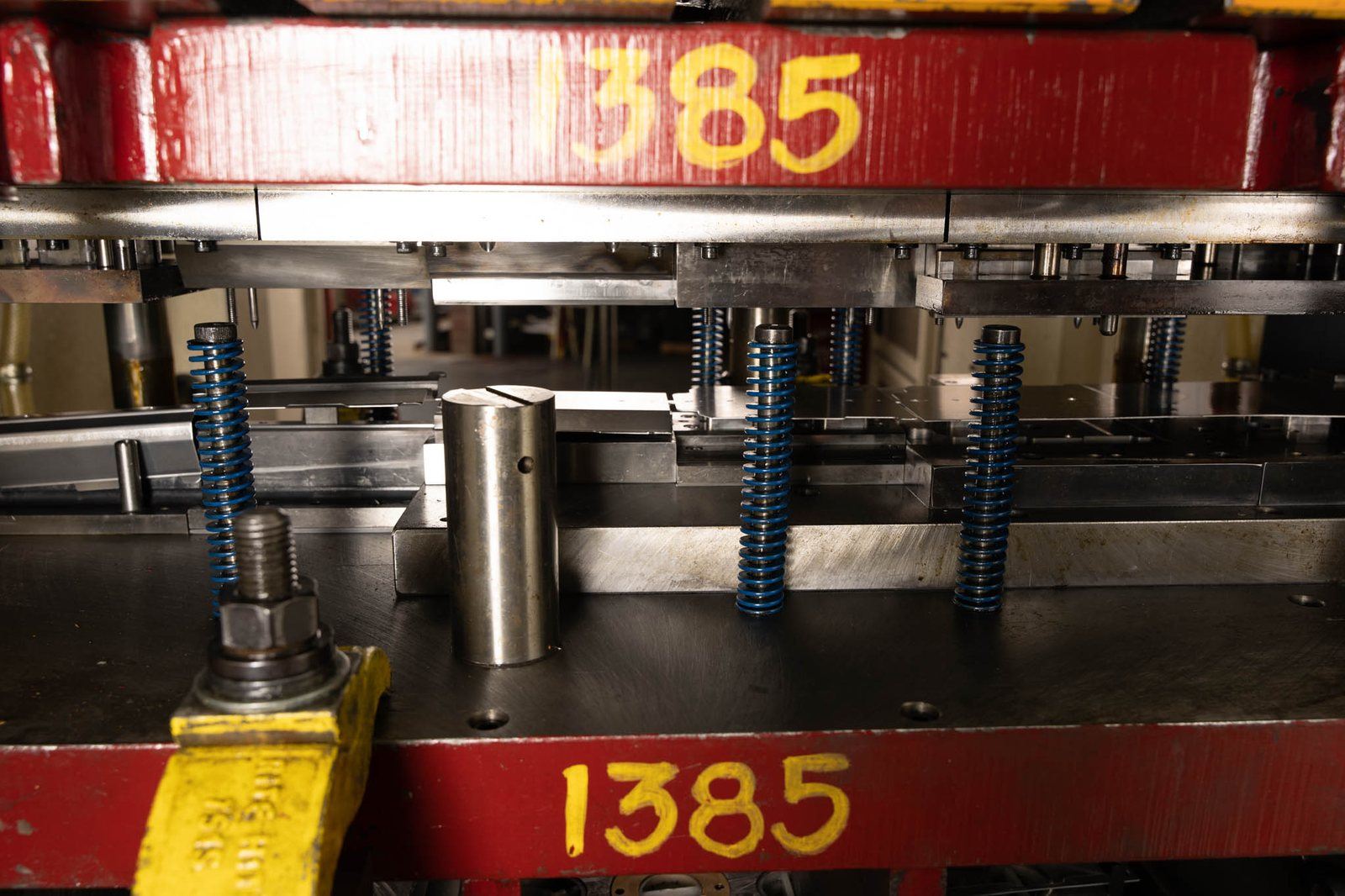
Frontier has been designing and building its own stamping tools for over 40 years, in our own tool room in Frederick, Colorado. We do not send die work out. The people who build your tool work forty feet from the press that will run it, which is why a problem found at tryout gets fixed the same week instead of next quarter.
And when we build a tool, you stop paying for it.
Pay once, tool for life
You pay for the tool once, when parts coming off the press are acceptable to you. Not at design, not at first article. When the parts are right.
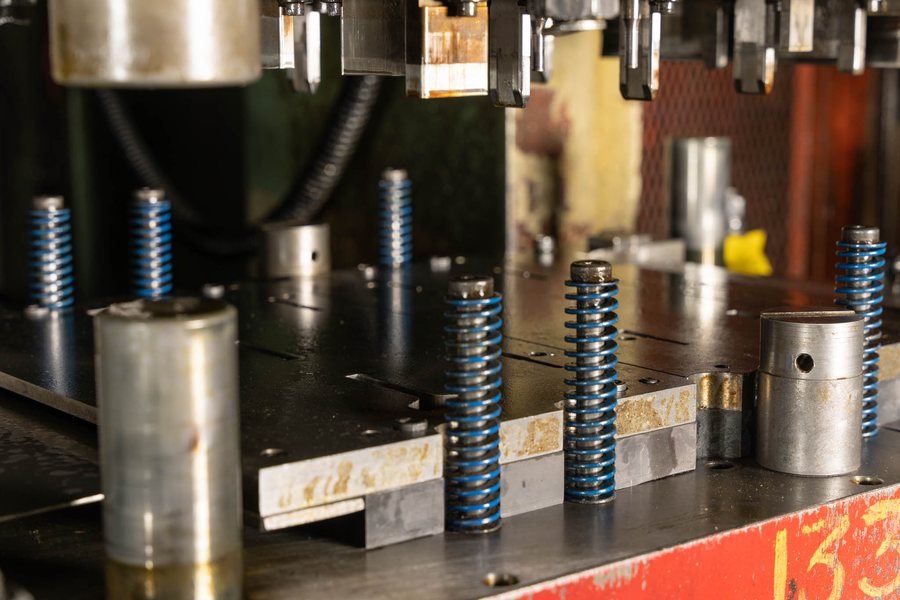
After that, as long as the part design does not change, you never pay Frontier for that tool again. Setups, die maintenance, sharpening, storage and complete rebuilds are all covered. If the tool wears out after four million hits, we rebuild it. That is not a service contract you buy, it is how we quote every job.
What ends the guarantee
Two things, and we would rather be plain about them than bury them.
- The part design changes. A revised print means a different tool, or modifications to an existing one, and that is quoted as new work.
- The tool leaves our floor. The tooling is yours and you can take it whenever you want. Once it goes out our loading dock we can no longer stand behind a tool we are not maintaining, so the guarantee ends there.
You own the tooling. All of it.
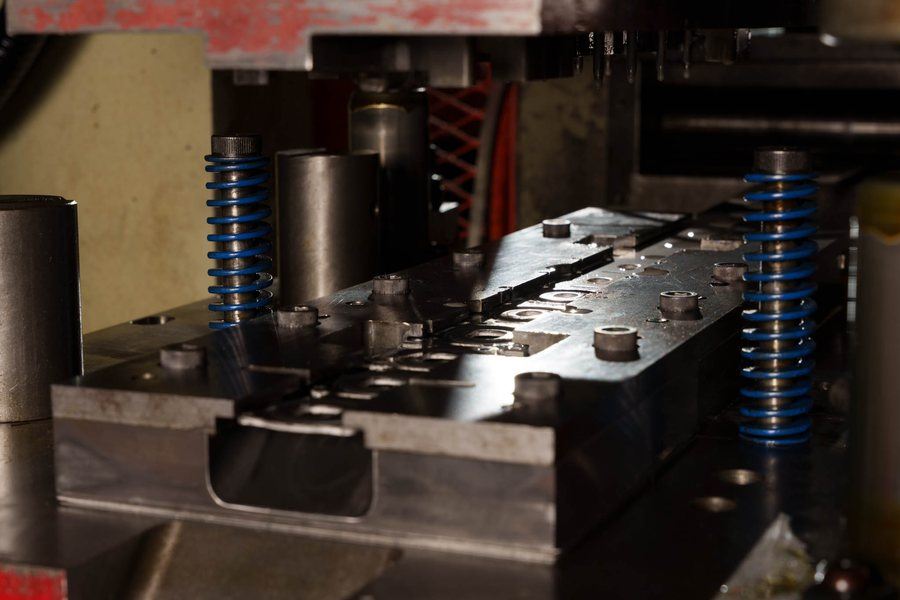
You own one hundred percent of the die set and every piece of related tooling, from the day you pay for it. Frontier stores it and maintains it for the life of the part at no charge.
If you decide to move production somewhere else, the tooling is picked up at our dock and it goes with you. No storage invoice, no argument. What we cannot do is warrant a tool once it is running on someone else's press.
Choosing the right tool for your volume
The tool you should build depends almost entirely on how many parts you need per year. Getting this wrong is the most expensive mistake in stamping, in both directions: an over-built die on a low-volume part, or piece prices that never come down on a part that deserved a progressive die two years ago.
| Annual usage | Method | Why |
|---|---|---|
| 1 – 8,000 | Press brake and single-hit manual presses | Little or no tooling cost. Piece price is higher, but you are not paying to amortize a die you do not need. |
| 8,000 and up | Progressive die | Multiple operations in one pass through the press. Tooling costs more up front and piece price drops sharply. |
| 500,000 and up | Multi-slide | Very high volume small parts, clips, springs and wire forms. We run two US Baird #28 multi-slides. |
Those are starting points, not rules. The real answer is a calculation, and it is worth doing rather than guessing.
When does the tooling pay for itself?
Take the difference in tooling cost between the two approaches and divide it by the difference in piece price. That is the quantity where the more expensive tool becomes the cheaper answer. Put your own numbers in.
Total cost as quantity grows
| Quantity | Short run | Progressive die | Difference |
|---|
Break-even ignores freight, inventory carrying cost and the value of fewer setups, all of which tend to favor the progressive die on a part you will make for years. Treat the number as the start of a conversation, not a quote.
What we build tools out of
Die components get made from hardened tool steel, and the grade is chosen against how many parts the tool has to make, how abrasive the material is, and how much you want to spend up front. We commonly build in D2, A2, S7, M2, M4 and A11 (CPM 10V), and move to carbide inserts where the run rate justifies it.
A cheaper grade means a lower tooling cost and a shorter interval between rebuilds. A premium grade or carbide costs more to build and runs far longer between touches. Since we cover the rebuilds either way, we will tell you honestly which one your part actually needs.
The tool room
- Three Mitsubishi wire EDMs — FA20-S, MD+Pro III and MV2400S
- Perseo-Erie EDM DrillMate 25
- Fadal VMC 4020 and VMC 15-XT vertical machining centers
- Brother Speedio R450 machining center
- Okamoto 12″ × 24″ surface grinder, plus three more surface grinders
- Lindberg heat treat and temper ovens
- Mastercam and SolidWorks for die design
| Stage | Typical lead time |
|---|---|
| Design and DFM review | Under a week |
| New tool design, build and tryout | 3 – 14 weeks, by complexity and station count |
| First article after tool completion | 1 – 2 weeks |
| Emergency tool repair | Under a week |
Design rules that keep tooling cost down
Most of the cost in a stamped part is decided before anyone cuts steel. These are the things we look for first, and the things we will ask you to change if the print allows it.
- Minimum bend radius of 2× material thickness. Dead sharp bends crack the material and punish the tool.
- Minimum hole diameter of 1.2× material thickness. Piercing a hole smaller than that is like pushing a needle through steel. It can be done, but the punch will not survive production.
- General stamped feature tolerance of ±0.005″. Well-designed tooling holds this across most features.
- Material between 0.010″ and 0.250″ thick. Below 0.010″ we use a chemical etch process instead.
What we turn down
We would rather tell you in the first ten minutes than take the job and disappoint you.
- Non-metal parts. Raw material that cannot be fed and formed in a press.
- Deep draw. We do not do it, and there are shops that do it well.
- Features tighter than ±0.005″. Machining is the right process for those, not stamping.
- Material under 0.010″ thick. Chemical etching is the right process.
- Dead sharp bends and undersized pierced holes, unless the print can be adjusted.
If your part falls outside what we do, we will say so and point you somewhere useful.
What a failing tool actually costs
A customer came to us running parts on a die set built somewhere else years earlier. Scrap started at around 12 percent, climbed through the thirties, and reached 45 percent by the time the failures were charted. The pareto pointed at one dimension, then a cluster of location and lance defects behind it.
The tool was not out of adjustment. It was worn out. The locating features had lost their edge and nearly every part coming off it was compromised.
Rather than keep chasing symptoms, we built a new tool. Yield went from roughly 50 percent to 98 percent, and the tooling paid for itself in nine to twelve weeks on scrap savings alone.
That is the argument for a proper tool, and it is also why our tools include rebuilds. A worn die is not a maintenance line item you should be absorbing.
Common questions
Does Frontier build its own tooling?
Yes. Progressive dies, multi-slide tooling and single-hit tools are designed and built in our own tool room in Frederick, Colorado. Die work is not sent out.
Who owns the tooling once it is paid for?
You do, one hundred percent of the die set and all related tooling. Frontier stores and maintains it for the life of the part at no charge, and you can take it whenever you want.
What does the tooling guarantee cover?
Setups, die maintenance, sharpening, storage and complete rebuilds, for as long as the part design does not change and the tool runs on Frontier presses.
How many parts do I need before a progressive die makes sense?
Usually around 8,000 a year, but the honest answer is a calculation. Divide the extra tooling cost by the saving per part. There is a calculator on this page.
How long does a new tool take?
Three to fourteen weeks depending on complexity and station count, then one to two weeks to a first article.
What tolerances can you hold?
Plus or minus five thousandths of an inch across most stamped features with well-designed tooling. Tighter than that and machining is usually the right process, and we will tell you so.
Send us the print and the quantity
We will run the break-even on your actual part before anyone commits to a tool.
Open Monday through Friday.