Materials We Stamp
Every grade we have built parts from, with the thickness and width we actually run — and an honest explanation of what decides them.
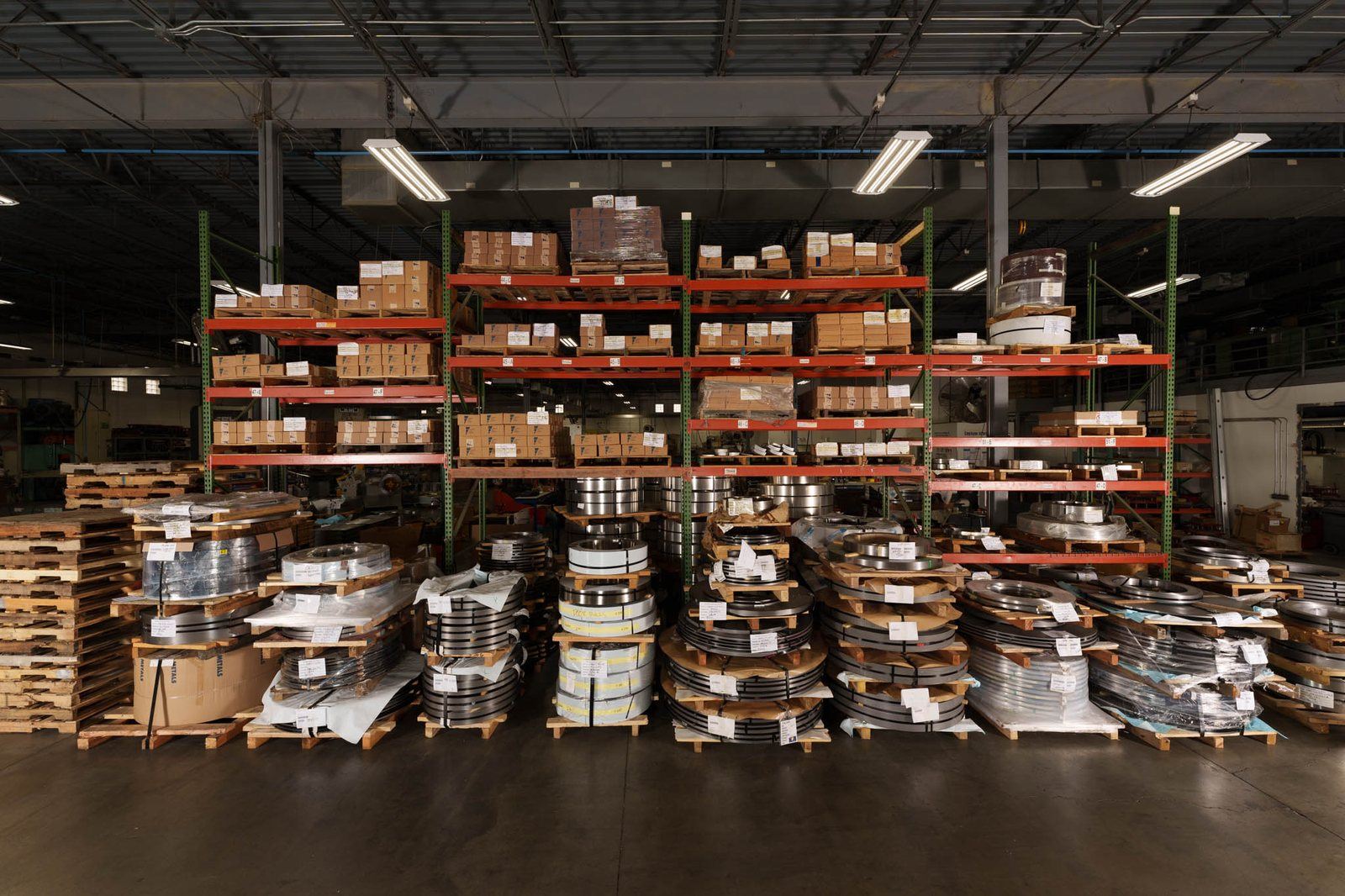
Carbon and stainless steel, aluminum, copper alloys, spring steel and nickel alloys up to Hastelloy C22. Every grade below is one we have built parts from.
The question behind "can you stamp this material" is almost never about the material on its own. It is that material, at that gauge, in that geometry, at that quantity, on a press with a given tonnage. Those four decide the answer together, which is why the table has two dimension columns rather than one number.
What we stamp
Every grade below is one Frontier has actually built parts from. Thickness and width limits are real limits, not aspirations — and the two interact, so the maximum thickness and the maximum width are rarely available at the same time.
| Material | Grades and alloys | Thickness | Width |
|---|---|---|---|
| Carbon steel | 1008, 1010, 1018, 4140, 1050–1095. Hot rolled, cold rolled, HSLA. | 3/16″ typical 1/4″ max | 12″ 4″ at max thickness |
| Stainless steel | 303, 304, 305, 310, 316, 409, 430, 434, 444, 17-4PH, 2205 | 3/16″ typical 1/4″ max | 12″ 4″ at max thickness |
| Aluminum | 1100, 2024, 3003, 5052, 5083, 6061, 6082, 7005, 7075 | Under 1/4″ 1/4″ max | 24″ 12″ at max thickness |
| Copper alloys | Brass, bronze, phosphor bronze, copper, beryllium copper. All alloys, to ASTM B46 and ASTM B171. | 1/8″ max | 24″ |
| Nickel alloys | Inconel 625, Incoloy 800, Monel 400, Hastelloy C22 | Case by case | Case by case |
| Spring steel | High-carbon spring steels, stamped and formed to print. | 3/16″ typical | 12″ |
| Galvanized and aluminized steel | Corrosion protection in the coil, so the part does not need plating after forming. | 3/16″ typical | 12″ |
Thinner than 0.010″ and we send it out for chemical etching rather than pretending a press is the right tool. Not seeing your material? Ask. This is the normal run of work, not a closed list.
What the table does not tell you
Stainless work-hardens as it forms. That changes how the die gets built, not whether the job is possible, and it is the reason a stainless version of a part you already run in steel is not simply the same tool with different material through it.
Aluminum is the easiest of these to finish. Anodize and chem film to MIL spec, through our finishing partners.
Copper alloys are forgiving to form and unforgiving about burrs. If the part conducts or springs, the burr specification matters more than the profile tolerance.
The nickel alloys are quoted case by case because thickness, geometry and quantity interact differently in Inconel and Hastelloy than they do in steel. Send the print and the annual quantity and you will get a real answer.
How tonnage actually works
Most people assume press tonnage is about thickness. It is really about three things at once: thickness, perimeter and the shear strength of the material.
The consequence surprises people. A part with a lot of perimeter — a complicated outline, many holes, long slots — needs a lower thickness for a given tonnage than a simple part does. Two parts in the same material and the same gauge can land on different presses because one of them has three times the cut length of the other.
This is why we would rather see the print than answer the question in the abstract. "Can you stamp quarter-inch stainless" has no single true answer. Quarter inch stainless in a simple washer, yes. Quarter inch stainless in a part with forty inches of cut perimeter is a different press and possibly a different process.
The gauges we run
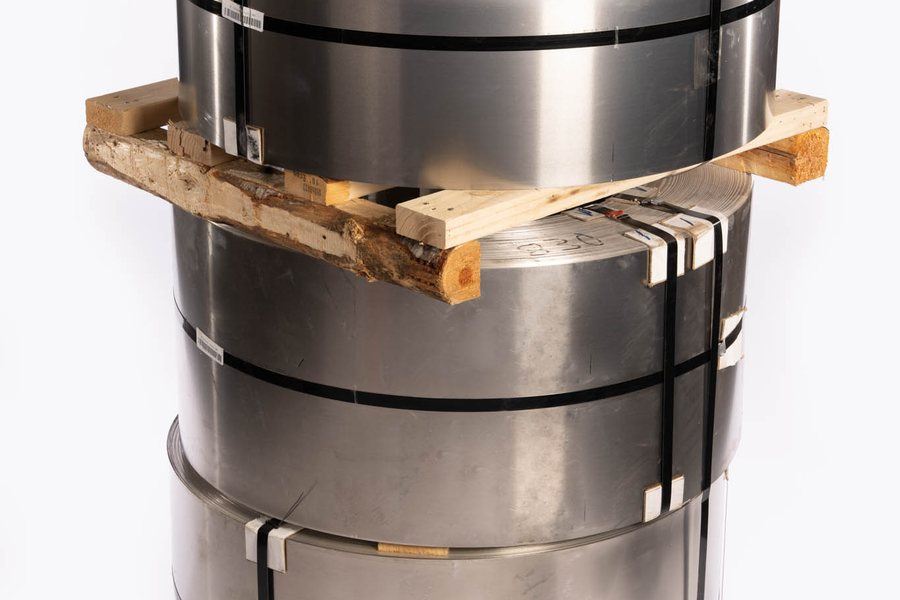
Our heaviest coil line takes stock up to .250 by 24 inches through a Cooper Weymouth cradle and straightener, and the 260 ton StamTech runs .187 by 24 with feed and tonnage control. At the light end, the Rapid Air straightener handles .060 by 8 inches and the multi-slides work in wire and thin strip.
Between those two ends is essentially everything. If your part sits near either edge, that is worth a conversation before you design around it.
Material we will not pretend about
We are comfortable across every grade listed above. What we will tell you plainly is when a material is the wrong choice for what you are trying to do — when a cheaper steel would do the job, or when the alloy you have specified is going to fight the forming operation and cost you in scrap. That conversation happens during the engineering review, before the tool is cut.
Common questions
What is the thickest material you can stamp?
Our heaviest coil line handles .250 by 24 inches. But thickness alone does not decide it: tonnage depends on thickness, perimeter and shear strength together, so a part with a lot of cut length needs thinner stock for the same press.
Do you stamp copper and brass?
Yes, routinely, along with bronze, phosphor bronze and beryllium copper for contacts and springs.
Can you source the material?
Yes. Most customers have us buy it, which keeps one supplier accountable for the finished part rather than two arguing about whose fault it was.
Send us a print
Tell us the part, the material and the annual quantity. We will come back with a straight answer on tooling, lead time and price.
Open Monday through Friday.